Miami Real Estate: A Practical Guide for Agents
Miami is one of the most active real estate markets in the country, and one of the most layered. Downtown and Brickell condo towers, new construction in Edgewater and Wynwood, historic bungalows, waterfront homes on Biscayne Bay, and a steady flow of international and out-of-state buyers all sit inside one city. Agents who do well here know which questions each property raises before the client asks.
This guide is for agents who work, or want to work, the City of Miami. It covers how the city is laid out, the main neighborhoods and property types, the due diligence that matters most, MLS coverage, and what to ask a brokerage. Agent Plus Realty agents work this market remotely, with direct access to the broker.
How Miami Is Laid Out
The City of Miami is the county seat and the largest of Miami-Dade County’s 34 municipalities. It runs along Biscayne Bay from the Upper East Side in the north to Coconut Grove in the south, with the Miami River cutting through the middle between Downtown and Brickell.
The city is only part of what people call “Miami.” More than a million Miami-Dade residents live in unincorporated areas governed directly by the county, and many of them have a Miami mailing address. Kendall, for example, is unincorporated, while Coral Gables, Miami Beach, Doral and Hialeah are separate cities with their own rules. Before you talk about permits, zoning or rental rules, confirm whether the property is in the City of Miami, another city, or unincorporated Miami-Dade.
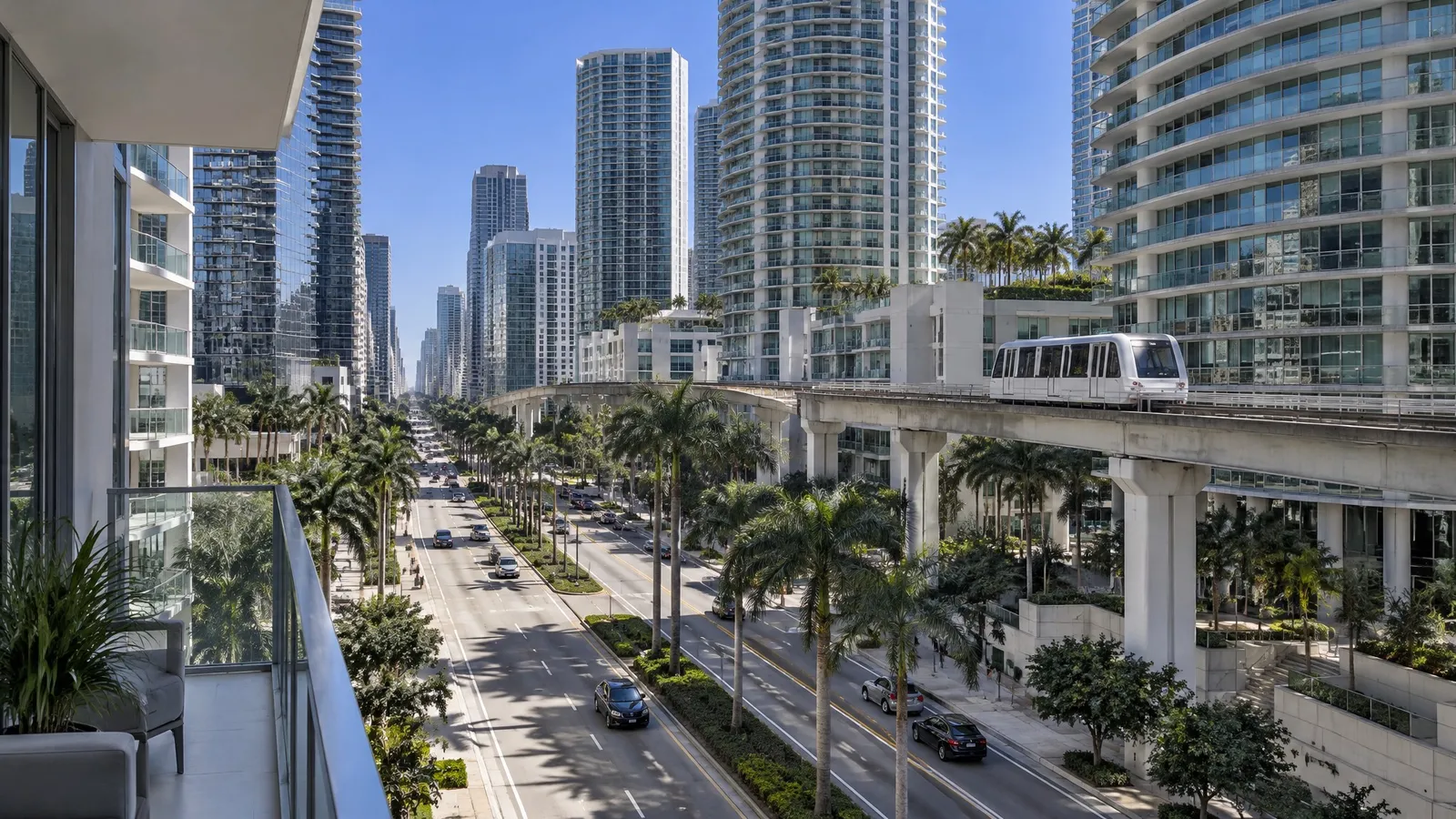
I-95, US-1 and the Palmetto Expressway run north–south, and SR 836 (the Dolphin Expressway) links Downtown to the airport and the western suburbs. Metrorail runs from the airport and Hialeah through Downtown to Dadeland, the free Metromover loops through Downtown and Brickell, and Brightline connects Downtown Miami to Fort Lauderdale, West Palm Beach and Orlando.
Neighborhoods and Property Types
Brickell and Brickell Key
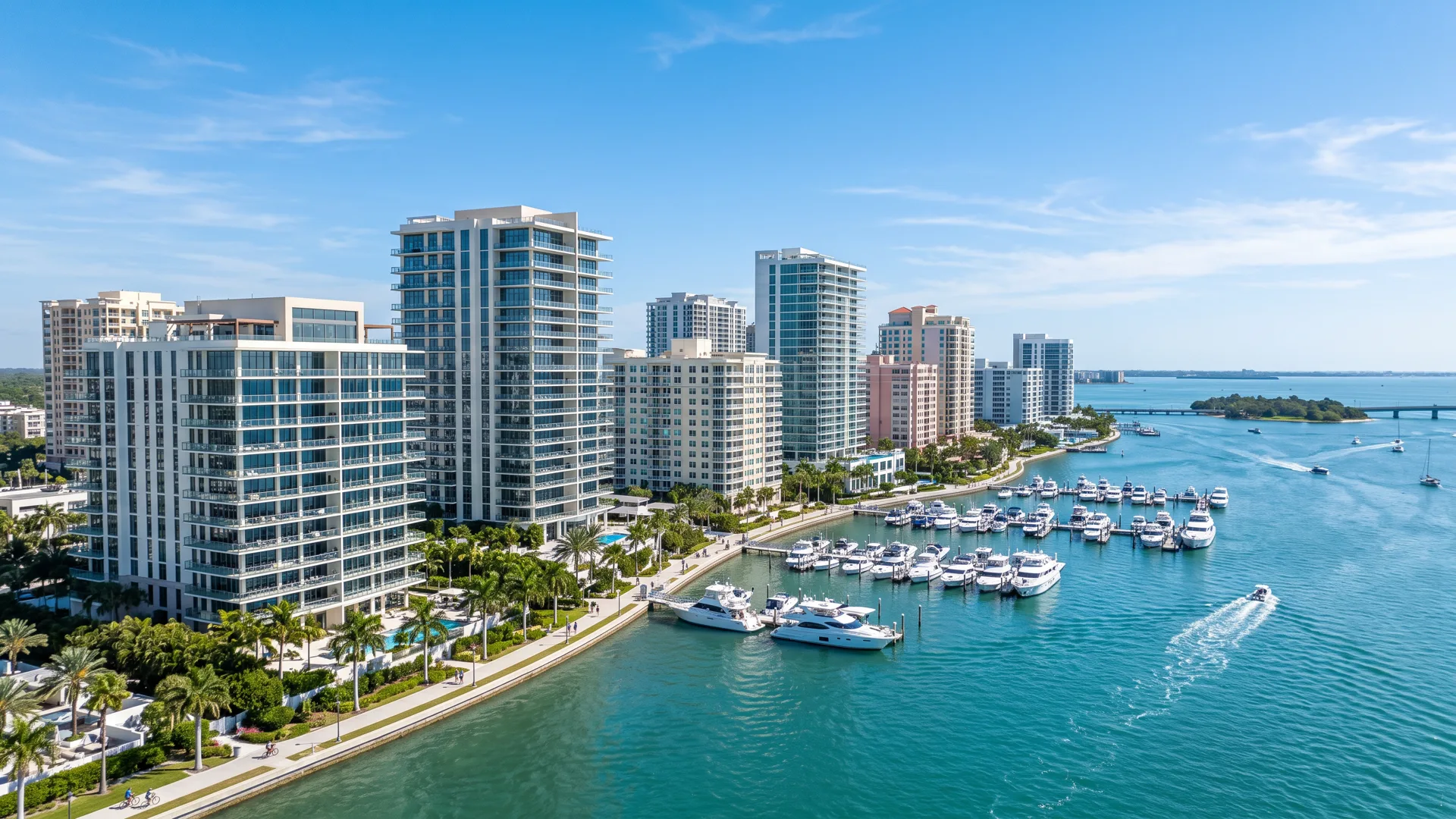
Brickell is Miami’s financial district and its densest condo market: high-rise towers, condo-hotels and rental buildings south of the Miami River, plus the island of Brickell Key. Buyers include primary residents, second-home owners and investors, and they want details on association fees, reserves, special assessments, rental rules and how many units are investor-owned. Know the difference between a residential condo and a condo-hotel before you show one: financing, rental rights and owner use can all differ, and some buildings are hard to finance at all.
Downtown and Edgewater
Downtown has high-rise condos and rental towers near the Metromover, Bayfront Park and the arena. North along the bay, Edgewater has seen a wave of new condo towers, many sold pre-construction. Agents here need to understand pre-construction contracts, deposit schedules and the gap between a project’s sales launch and its certificate of occupancy.
Wynwood, Midtown and Allapattah
Wynwood and Midtown mix new mid-rise rentals, condos and commercial space. Allapattah, west of I-95, has older single-family homes, small multifamily buildings and warehouses alongside new development. Zoning and permitted uses vary block by block, which matters to investors and small-business buyers.
Upper East Side
The Upper East Side runs along Biscayne Boulevard north of Midtown. It includes bayfront single-family neighborhoods such as Morningside and Bayside, which are historic districts, and the MiMo district’s mid-century commercial strip. Historic designation can affect renovations, so ask early.
Little Havana and the near-west
Little Havana, west of Brickell along Calle Ocho, has older duplexes, small apartment buildings, bungalows and newer infill. It is a common market for small multifamily investors, so rental history, unit counts and permits for any added units matter.
Coconut Grove
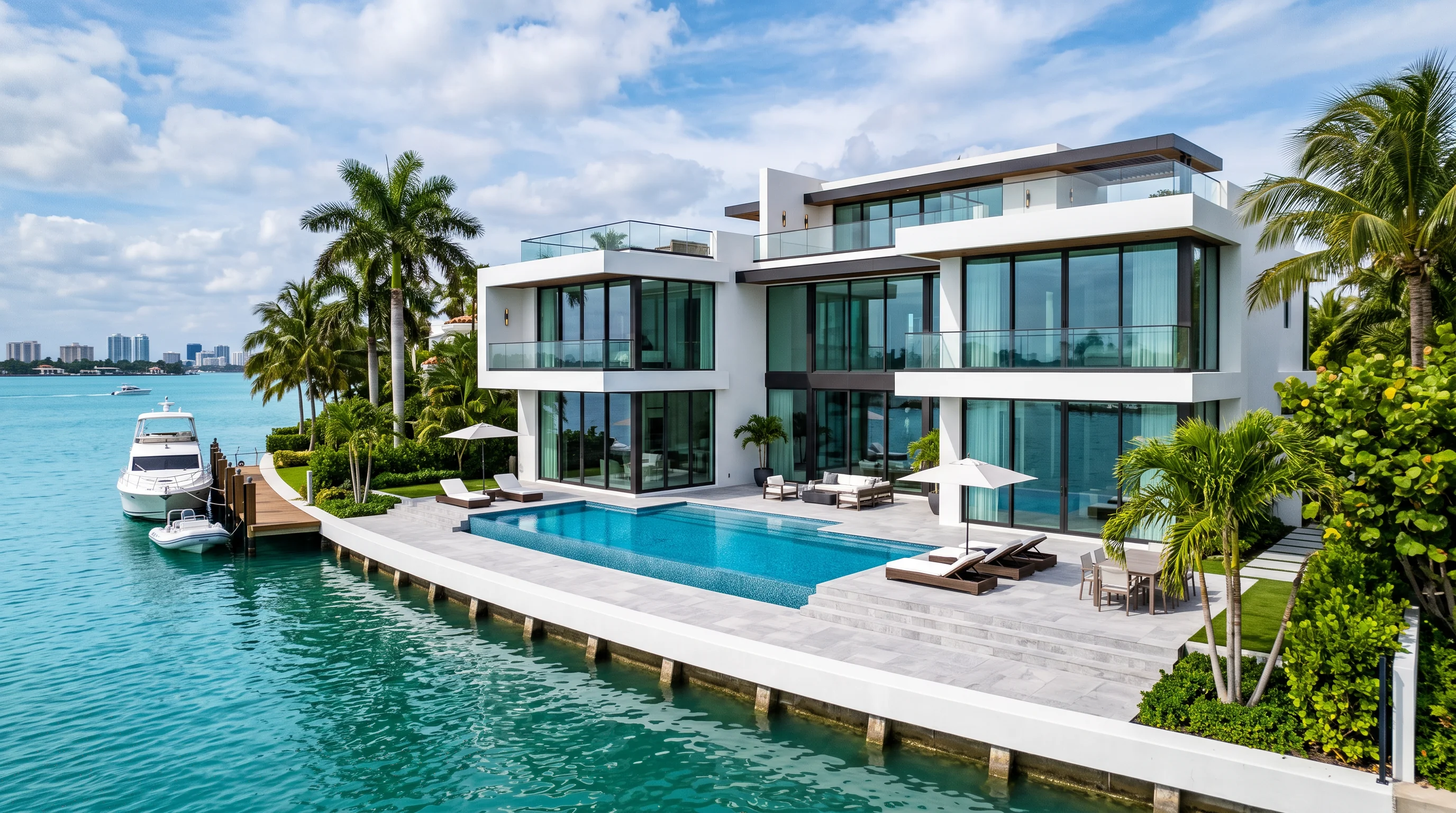
Coconut Grove, south of Brickell, has a mix of bayfront estates, older single-family homes on large, heavily treed lots, townhomes and some condos near the Grove’s commercial center. Tree protection and special zoning rules apply in parts of the Grove, so check before a buyer plans to build or expand.
Western neighborhoods
West of I-95 and along SR 836, neighborhoods such as Flagami, Shenandoah and The Roads offer established single-family homes, villas and condos. These areas suit agents building volume with first-time and move-up buyers.
Due Diligence That Matters Here
- Jurisdiction. Confirm whether the property is in the City of Miami, another municipality or unincorporated Miami-Dade before you describe permits, zoning or rental rules.
- Building recertification and milestone inspections. Miami-Dade requires most buildings other than single-family homes and duplexes to be recertified at 30 years old and every 10 years after that. Condo and co-op buildings three stories or taller within three miles of the coast are on a 25-year first inspection. Exemptions and transition rules apply, so confirm the building’s status with the city or county. Separately, where applicable, Florida requires milestone inspections and structural integrity reserve studies (SIRS) for condo and co-op buildings three habitable stories or taller. Statutory exemptions apply. Our milestone inspection and SIRS guide explains the state rules.
- Condo documents to request. Ask for these early, because they can decide whether the buyer proceeds and whether the unit can be financed:
- Recertification status and reports
- Milestone inspection report, where one is required
- Structural integrity reserve study, where one is required
- Current budget and reserve balances
- Existing and planned special assessments
- Recent board meeting minutes
- Leasing rules and the buyer or tenant approval process
- Pre-construction contracts. For new towers, review the deposit schedule, escrow terms, estimated completion date and what happens if the project is delayed. The developer’s contract usually favors the developer.
- Flood risk, not just flood zone. Much of the bayfront and many low-lying areas sit in special flood hazard areas, but a flood-zone label is not a full picture of the risk. Ask about past flooding, elevation and prior claims. Florida sellers of residential property must give buyers the statutory flood disclosure at or before signing the contract (s. 689.302, F.S.), and since October 2025 it also covers flood damage the seller knows about. Residential landlords now have their own flood disclosure duty for leases of one year or longer (s. 83.512, F.S.).
- Insurance quotes early. Homeowners, wind and flood insurance can change whether a deal works, especially for older homes and older condo buildings. Encourage buyers to get quotes during the inspection period.
- Short-term rentals. The City of Miami generally treats short-term rentals (stays of less than 30 days) as a lodging use, allowed only in certain zoning districts under its Miami 21 code. How the rules apply can depend on how the unit is rented and how often, so confirm with the city’s zoning office. Single-family homes and duplexes in T3 and T4-R zones are generally not eligible. Condo and apartment units may require city approvals and, where applicable, association approval, and the condo documents may ban short stays outright. Never tell a buyer a property can be rented on Airbnb or a similar platform until the zoning, the city approvals and the association documents have all been checked.
- Foreign sellers and FIRPTA. Many Miami properties are internationally owned. What matters is whether the seller is a foreign person for federal tax purposes, not simply where the seller lives. If so, the buyer may have to withhold part of the price under FIRPTA. Raise it when you take the listing or write the offer, and bring in the closing agent and the seller’s tax adviser early. Don’t give tax advice yourself. Our FIRPTA guide explains the basics.
- Association approvals. Many condos require buyer or tenant approval and set leasing limits. Build approval time into the contract dates.
Selling condos? Read our South Florida condo market guide. Working the high end? See our South Florida luxury agent guide.
MLS Coverage in Miami
Miami-Dade listings have traditionally been in the Miami REALTORS® MLS, while Broward and Palm Beach listings are largely in BeachesMLS. On May 11, 2026, Miami REALTORS® and RWorld (the Broward, Palm Beaches & St. Lucie association) completed their merger into one regional association. The MIAMI MLS and BeachesMLS platforms are both still operating while the two systems are integrated, so verify current platform access, membership requirements and subscription fees when you join any brokerage. Agent Plus Realty participates in five Florida MLS systems: Miami REALTORS®, BeachesMLS, SW Florida MLS, Stellar MLS, and Daytona Beach MLS. Brokerage MLS participation is available through the MLS systems listed. Individual MLS, board, association, eKey/lockbox, data-access, and related third-party fees may be separate unless otherwise stated in writing.
What to Ask a Brokerage in Miami
- Can I reach the broker directly? Pre-construction, condo and foreign-seller deals raise questions that need fast answers.
- What does the split cost me on a large sale? Miami price points make a percentage split add up quickly. Ask for the math on your actual numbers.
- What is included, and what costs extra? Get a written list of included tools and of optional paid products.
- Which MLS systems does the brokerage participate in? Make sure it covers Miami-Dade, Broward and Palm Beach if you work across county lines.
- Can I work in Spanish or Portuguese? Many Miami deals happen in more than one language. Ask whether the broker can support you in yours.
Our guide to choosing a Florida brokerage has a longer checklist.
Working Remotely with Agent Plus Realty in Miami
Remote Support
Work from anywhere in Florida and still reach the broker directly.
- Phone954-933-8419
- WhatsApp+1 954-605-2954
- VideoVideo calls by appointment
Broker support in English, Spanish and Portuguese.
- 100% commission on residential sales for experienced agents. Newly licensed agents start at an 80/20 split for their first 3 closed residential sales, with mentorship from the broker or an experienced Agent Plus agent, then move to 100% automatically.
- Commercial sales and all leases are 80/20.
- A $595 transaction fee applies per side to residential and commercial sales. It is typically paid by the client at closing, must be agreed to in writing and disclosed, and is paid by the agent if the client doesn’t. Leases carry no transaction fee.
- AGENT PLUS REALTY, LLC charges no required monthly, desk, or franchise fees. Agents are responsible for their own MLS dues, association fees, eKey/lockbox access, and license renewal costs. Optional premium technology services may require a separate fee.
- Dotloop Premium and E&O included. Optional tech and services may cost extra.
Example: on a $20,000 residential commission, an experienced agent keeps the full $20,000 when the client pays the $595 fee at closing, as agreed in writing. If the client doesn’t pay it, the agent does. For comparison, a 70/30 split on the same sale leaves $14,000, and an 80/20 split, which is also where newly licensed agents start, leaves $16,000, before any caps or other fees a competing plan may have.
This example is illustrative. Commission rates are negotiable and not set by law. Commission terms are subject to the Agent Plus Realty Independent Contractor Agreement and applicable transaction documents.
Run your own numbers in our commission calculator, or see the full plan details on our Miami brokerage page. You can also visit our Miami-Dade County page or read the Fort Lauderdale guide.
Meet the broker at our Deerfield Beach office by appointment.
Frequently Asked Questions
Which MLS do agents use in Miami?
Miami-Dade listings have traditionally been in the Miami REALTORS® MLS, and Broward and Palm Beach listings in BeachesMLS. The two associations completed their merger on May 11, 2026, and both MLS platforms are still operating while they are integrated, so verify current access and fees. Agent Plus Realty participates in both, plus SW Florida MLS, Stellar MLS, and Daytona Beach MLS.
How does Miami-Dade’s building recertification affect condo deals?
Most Miami-Dade buildings other than single-family homes and duplexes must be recertified at 30 years old and every 10 years after that. Condo and co-op buildings three stories or taller within three miles of the coast are on a 25-year first inspection, and exemptions and transition deadlines apply. Ask for the recertification status, the state milestone inspection and reserve study reports, the budget and reserves, and any planned special assessments before the buyer’s review period ends, because they affect both the decision and the financing.
Can my buyer rent the property short-term?
It depends on the zoning and the building. In the City of Miami, single-family homes and duplexes in T3 and T4-R zones are generally not eligible, and condo and apartment units may require city approvals and, where applicable, association approval. Check the zoning, the approvals and the condo documents before the buyer counts on rental income.
Where can I meet the broker if I work in Miami?
Agent Plus Realty’s headquarters is at 208 S Military Trail, Deerfield Beach, FL 33442. Broker John Santos meets agents there by appointment and can be reached at 954-933-8419.
Can I work fully remotely with Agent Plus Realty?
Yes. You can run your business from anywhere in Florida. Contracts and compliance are handled online, and you can reach Broker John Santos by phone at 954-933-8419, by WhatsApp at +1 954-605-2954, or by video call (by appointment), in English, Spanish or Portuguese.
Does the agent have to pay the $595 transaction fee?
Usually not. The fee is typically paid by the client at closing when it has been agreed to in writing and disclosed, so it does not come out of the agent’s commission. If the client doesn’t pay it, the agent does. The “Working Remotely with Agent Plus Realty in Miami” section above has the full terms.
The Bottom Line
Miami rewards agents who know its pieces: Brickell and Downtown towers, Edgewater pre-construction, historic bayfront neighborhoods, small multifamily in Little Havana and the Grove’s older homes. Confirm jurisdiction, start recertification, flood, insurance and rental questions early, and work with a brokerage that gives you a broker you can reach.
Disclaimer
This article is for informational purposes only and does not constitute legal, tax, or financial advice. Commission structures, fees, and brokerage terms described here apply to Agent Plus Realty and may differ from other brokerages. “100% commission” refers to residential sales transactions; commercial and leasing transactions are paid at an 80/20 split. The $595 transaction fee is typically charged to the client on the closing statement where permitted and applicable. Consult a qualified professional for advice specific to your situation.

John Santos
Licensed Broker, Agent Plus Realty · CQ1048144
John Santos is the founder and licensed broker of Agent Plus Realty, a 100% commission brokerage serving 200+ agents across Florida.