Commercial Real Estate Agents in Florida: How the 80% Split Works
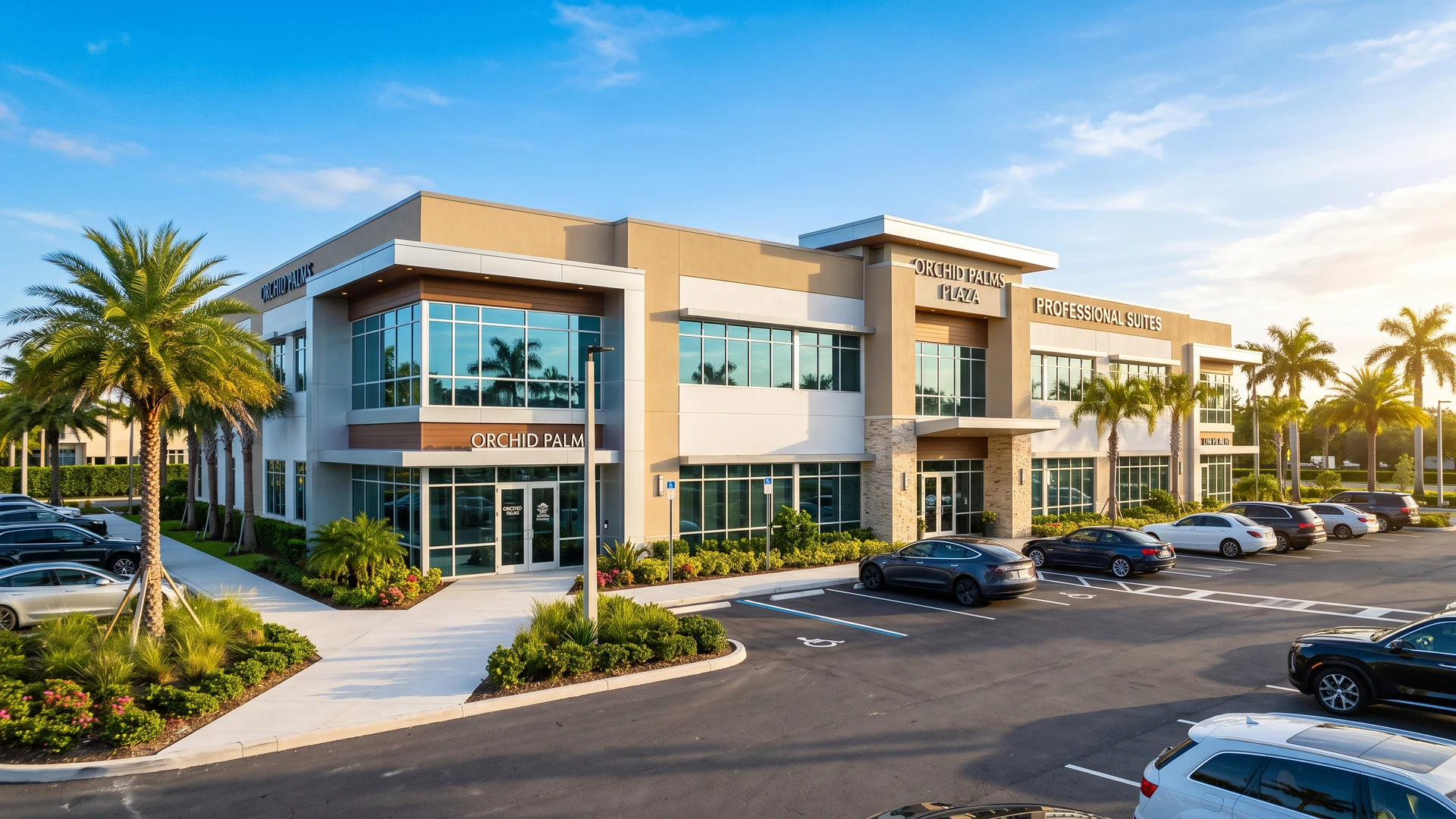
Most real estate content online is written for residential agents. But Florida’s commercial market — strip malls, office buildings, industrial parks, multifamily complexes, and lease deals — is massive, and the agents who work it often struggle to find a brokerage model that makes sense for how commercial deals actually work.
If you’re a commercial agent (or a residential agent thinking about adding commercial to your practice), this guide breaks down how the 80/20 split works at Agent Plus Realty, how commercial commissions are structured, and why a flat-split model may be a better fit for commercial production than a percentage-on-top-of-percentage franchise arrangement.
How Commercial Commissions Work in Florida
Commercial real estate commissions are negotiated differently than residential. There is no standard commission rate set by law or MLS — everything is negotiable. That said, common benchmarks in Florida include:
- Commercial sales: Typically 3–6% of the sale price, depending on the property type, price point, and complexity. Higher-value properties often negotiate lower percentage rates.
- Lease transactions: Commonly 4–6% of the total lease value over the full term, or a flat percentage of the first year’s rent. Some landlords pay a one-time flat fee. Multi-year leases with renewal options can generate significant commission.
- Dual agency / in-house: When one agent represents both sides (where permitted), the total commission is typically higher — but dual agency rules in Florida require careful disclosure.
The key difference from residential: commercial deals are often larger in dollar value but take longer to close, involve more complex due diligence (environmental, zoning, tenant improvement negotiations), and may have commission structures that pay out in phases.
The 80/20 Split: How It Works at Agent Plus Realty
At Agent Plus Realty, commercial sales and lease transactions are compensated on a straightforward 80/20 split — the agent keeps 80% of the earned commission, and 20% goes to the brokerage. The $595 per-side residential transaction fee does not apply to commercial deals; the 80/20 split is the sole brokerage compensation on commercial transactions.
For agents who also close residential deals, the model works in parallel: eligible residential sales earn up to 100% commission with the flat $595 per-side fee typically charged to the client where permitted, agreed, and applicable. You don’t need to choose one specialty or the other.
What Does This Look Like in Practice?
Consider a few illustrative scenarios:
- $1.2M retail strip sale at 5% commission: Total commission = $60,000. Agent keeps $48,000 (80%). Brokerage receives $12,000 (20%).
- 5-year office lease, $25/sq ft, 3,000 sq ft at 5% of total lease value: Total lease value = $375,000. Commission = $18,750. Agent keeps $15,000 (80%). Brokerage receives $3,750.
- $3M industrial warehouse sale at 3% commission: Total commission = $90,000. Agent keeps $72,000 (80%). Brokerage receives $18,000.
Illustrative only. Actual compensation depends on negotiated commission rates, transaction type, agreement terms, the closing statement, and the Agent Plus Realty Independent Contractor Agreement and applicable transaction documents.
Why the 80/20 Model Works for Commercial Agents
Many commercial agents work at brokerages that charge both a percentage split and monthly desk/technology/franchise fees. On a traditional 60/40 or 70/30 split with $500–$1,000/month in fees, a significant portion of every deal goes to overhead before the agent sees a check.
The 80/20 model is simpler and more predictable:
- No monthly fees required.
- No desk fees, franchise fees, or required technology surcharges.
- E&O coverage and Dotloop Premium are included.
- The brokerage’s compensation is 20% of the earned commission — period.
For agents who close 6–12 commercial deals a year, the savings compared to a franchise model can be substantial. And because there are no monthly fees, agents who have slower months (common in commercial, where deals take 3–6+ months to close) aren’t bleeding overhead while they wait.
Commercial Niches in Florida
Florida’s commercial market is diverse. If you’re thinking about focusing on commercial, here are the niches with the most activity:
- Retail / strip centers: South Florida’s population growth drives continuous retail demand. High foot traffic areas in Miami-Dade, Broward, and Lee County are consistently active.
- Industrial / warehouse: E-commerce has fueled warehouse demand across Central and Southwest Florida. Industrial parks in Orlando, Fort Myers/Lee County, and the I-4 corridor are in high demand.
- Office space: Post-pandemic, Florida has attracted companies relocating from higher-tax states. Fort Lauderdale, West Palm Beach, and Tampa have seen significant office leasing activity.
- Multifamily (5+ units): Apartment buildings and small multifamily complexes are a staple of Florida’s investment market. They’re classified as commercial transactions and compensated on the 80/20 split.
- Vacant land / development parcels: Particularly active in Cape Coral, Lehigh Acres, and the I-75 corridor. Builders and developers are actively acquiring land for new construction.
Residential + Commercial: The Hybrid Agent
Many of the most successful Florida agents work both sides. A residential agent who helps a client buy a home might also help them lease retail space for their business. A commercial agent who sells an office building might handle the investor’s condo purchase.
At Agent Plus Realty, this hybrid approach is built into the model:
- Eligible residential sales → up to 100% commission, $595 per-side fee typically charged to the client.
- Commercial sales and leases → 80/20 split, no per-side fee.
- One license, one brokerage, no switching or dual affiliations needed.
You don’t need to choose a lane. The model supports both, and Broker John Santos is available directly for contract review and compliance questions on either type of transaction.
Getting Started in Commercial Real Estate
If you’re a residential agent looking to break into commercial, here’s a practical path:
- Start with what you know. If you sell homes in a specific area, learn the commercial inventory in that same market. Who owns the strip malls? What office space is available? Which land parcels are for sale?
- Build relationships with investors. Many residential investors eventually move into commercial. Stay in touch with your past clients who own rental properties — they may be ready to scale.
- Learn the contracts. Commercial contracts (FAR/BAR Commercial, lease agreements) are different from residential. Study them, take a commercial CE course, and ask your broker to walk through your first deal.
- Target a niche. Don’t try to do everything. Pick one commercial niche (retail, industrial, multifamily, land) and become the local expert.
- Network with commercial professionals. Attend local CCIM, SIOR, or ICSC events. Commercial is a relationship-driven business even more than residential.
Frequently Asked Questions
Does Agent Plus Realty handle commercial real estate transactions?
Yes. Agent Plus Realty supports both residential and commercial transactions. Commercial sales and leases are compensated on an 80/20 split (agent keeps 80%, brokerage keeps 20%). The $595 per-side transaction fee does not apply to commercial transactions — the 80/20 split is the sole brokerage compensation on commercial deals. Compensation terms are governed by the Independent Contractor Agreement.
What qualifies as a commercial transaction?
Generally, commercial transactions include sales or leases of properties used for business purposes: office buildings, retail centers, industrial/warehouse space, multifamily (5+ units), land zoned for commercial use, and mixed-use properties. The classification of a property as commercial or residential is determined per the brokerage's policies and the Independent Contractor Agreement.
How is a lease commission calculated?
Lease commissions are typically based on a percentage of the total lease value over the term (e.g., 4–6% of gross rent for the full term, or a flat percentage of the first year's rent). The exact rate is negotiated between the parties. At Agent Plus Realty, the agent keeps 80% of whatever lease commission is earned, with the remaining 20% going to the brokerage.
Can I do both residential and commercial at Agent Plus Realty?
Yes. Many agents handle both. Eligible residential sales earn up to 100% commission with the $595 per-side fee typically charged to the client where permitted, agreed, and applicable. Commercial sales and leases earn 80% (agent) / 20% (brokerage). You do not need to choose one or the other.
Do I need a separate license for commercial real estate in Florida?
No. A Florida real estate sales associate license or broker license covers both residential and commercial transactions. There is no separate 'commercial license' in Florida. However, commercial real estate involves different contracts, due diligence, and market knowledge — continuing education and mentorship in the commercial niche are highly recommended.
The Bottom Line
Commercial real estate in Florida is a significant opportunity for agents willing to learn the niche — and the 80/20 split at Agent Plus Realty is designed to be straightforward, predictable, and fair. No monthly overhead eating into your margins while you wait for a 6-month deal to close. No franchise fees on top of a percentage split. Just 80% of what you earn, with broker support, Dotloop, and E&O included.
Interested in commercial real estate at Agent Plus Realty? Call Broker John Santos at 954–933–8419 for a direct conversation, or start your application to join.
Disclaimer
This article is for informational purposes only and does not constitute legal, tax, or financial advice. Commission structures, fees, and brokerage terms described here apply to Agent Plus Realty and may differ from other brokerages. “100% commission” refers to residential sales transactions; commercial and leasing transactions are paid at an 80/20 split. The $595 transaction fee is typically charged to the client on the closing statement where permitted and applicable. Consult a qualified professional for advice specific to your situation.

John Santos
Licensed Broker, Agent Plus Realty · CQ1048144
John Santos is the founder and licensed broker of Agent Plus Realty, a 100% commission brokerage serving 170+ agents across Florida.